
Announcing ~$225K in 2026-27 Educator Impact Grants, Including Our First Lee Family Legacy Grants for Newcomer Students
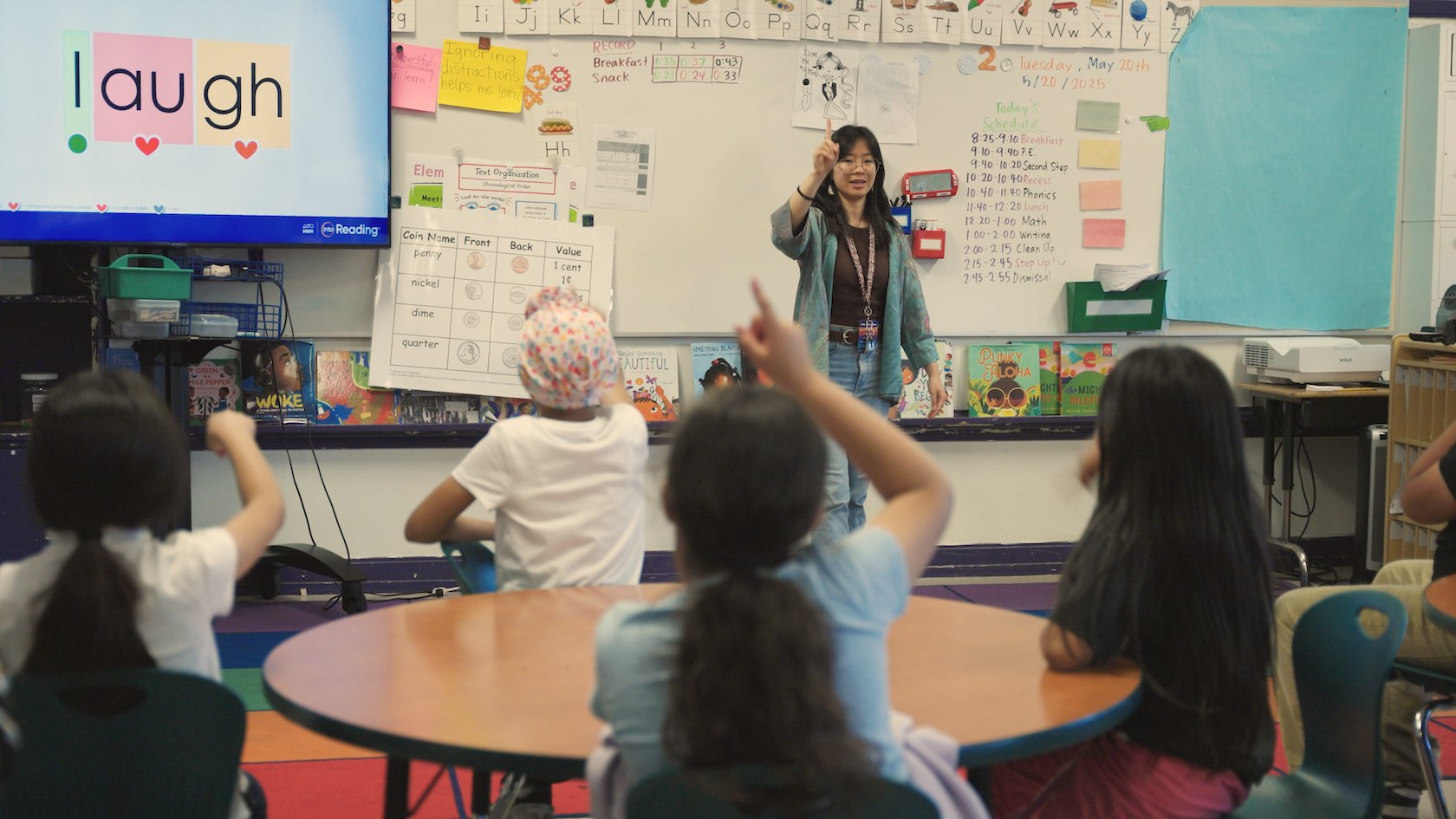
Every day, SFUSD educators see what their students need before anyone else does. Educator Impact Grants put resources directly in their hands so they can act on it. This year, SF Ed Fund is excited to award approximately $225,000 to 23 educator-led projects at 19 SFUSD schools, from kindergarten classrooms to high school math labs.
At the heart of this year's cohort is a new commitment to newcomer students: young people who have recently arrived in the United States and are learning English while also learning a new school system, a new city, and often how to rebuild friendships and routines from scratch. Thanks to a generous multi-year gift from the family of Pamela A. Lee, we launched the Lee Family Legacy Grants this year, dedicated entirely to newcomer students. Six schools received grants of up to $15,000 to build stronger systems of support for the nearly 400 newcomer students they serve.
The needs of newcomer and multilingual students also run through the rest of this year's cohort. Several of our 2026-27 Educator Impact Grants serve bilingual classrooms and multilingual families, from improvisational drama for English learners at Guadalupe Elementary to a bilingual family literacy series at Cleveland Elementary.
This Year at a Glance
- 23 projects at 19 SFUSD schools
- 6 Lee Family Legacy Grants for newcomer students, selected from 29 applications representing 27 schools
- 17 Educator Impact Grants, selected from 47 applications
- Newcomer grants of up to $15,000; school-wide Educator Impact Grants of up to $10,000 and individual grants of up to $5,000
- Student sense of belonging was the most common focus among Educator Impact Grant projects (13), followed by academic outcomes (10), student attendance (10), and teacher sense of belonging (5)
Thank You to Our Funders
These grants are possible because of partners who trust the expertise of San Francisco's educators. Our deepest thanks to the family of Pamela A. Lee, whose multi-year gift created the Lee Family Legacy Grants and is helping SFUSD schools welcome newcomer students with the care and resources they deserve. We are also grateful to the California Retired Teachers Association Division 36 and the Maxwell/Hanrahan Foundation for their continued investment in educator-led change across our district.
Lee Family Legacy Grants: Supporting Newcomer Students
When we invited schools to apply for newcomer grants, educators told us about far more than language. They described students adjusting to unfamiliar routines and grading systems, missing family members far away, and navigating housing instability, all while learning English. They also described extraordinary strengths: resilience, multilingualism, and determination. As the team at John O'Connell High School put it, their newcomer students "are not a deficit to be remediated; they are some of the most capable problem-solvers in our building."
The six projects below were chosen because they build lasting systems, not one-time fixes: peer leadership programs, targeted intervention, teacher learning, and meaningful partnerships with families.
Elementary Schools
Cleveland Elementary
Cleveland Compañeros: Building Belonging, Leadership, and Language Through Peer Connection
Educator lead: Sandra Vega, RSP Teacher, with a team of bilingual teachers
About 30% of Cleveland's 240 students are newcomers, and more than half of its teachers were once newcomers themselves. Because Cleveland's bilingual program shifts toward English instruction by third grade, students who arrive in 4th and 5th grade face an especially steep climb. Cleveland Compañeros will train 20 to 30 students in grades 2 through 5 as peer leaders who welcome newcomers, help them learn school routines, and include them at recess. The grant also creates a Newcomer Learning Library of bilingual books and games, monthly after-school Compañero Connections built around play, art, and music, and a student-friendly Cleveland Survival Guide. By June 2027, Cleveland aims for at least 80% of participating newcomers to feel welcome at school and know at least one peer or adult they can turn to for help.
ER Taylor Elementary
Supporting our Newcomers towards English Learner Reclassification
Educator leads: Stefanie Eldred, Community School Coordinator; Cynthia Lasden, Instructional Coach; and Saydah Henderson, Instructional Aide
E.R. Taylor serves about 90 newcomer students, most from Central and South America. Staff have seen students develop conversational English while still struggling with academic reading and writing, and the school day doesn't allow enough intensive small-group instruction. This grant funds four after-school intervention groups of four to six Spanish-speaking newcomers, led by a trained, Spanish-speaking instructional aide who works in tandem with the school's instructional coach. Using the SIPPS foundational literacy curriculum alongside oral language and writing routines, the team aims to help students reach English proficiency by the end of 2nd grade, before the ELPAC writing test becomes significantly harder. Participating students are expected to move up more than one level on both the oral and written sections of the ELPAC.
Marshall Elementary
Newcomer Success Club!
Educator lead: Mariana Andia Tejada, Community School Coordinator
Marshall serves about 40 newcomer students from more than ten countries across Latin America, many of whom are also navigating housing instability. Twenty-two are already in 4th or 5th grade, leaving little time to build English proficiency before middle school. At a recent reclassification workshop, only one or two of more than 30 parents knew what "reclassification" meant. The Newcomer Success Club pairs 12 weeks of after-school tutoring in English language arts and math, taught by credentialed Marshall teachers, with three family nights co-hosted with the PTA on reclassification, ParentVUE, and supporting learning at home. Marshall aims for at least 70% of participating students to show measurable growth in English or math.
Middle School
Visitacion Valley Middle School
Fostering a Sense of Belonging for Newcomer Students
Educator lead: Rufino Garcia Gonsales, Classroom Teacher
Visitacion Valley is one of only three SFUSD middle schools with a newcomer program, making it a citywide resource for families. After budget cuts reduced the program's capacity from 120 students to 50, the team is making every resource count. Four Emergent Bilingual teachers will share 100 extra hours of before- and after-school tutoring. A new peer-partner program will help students prepare for the move to high school, and families will connect with staff through field trips, Latinos Unidos, and a Latino Heritage Month honor roll banquet. Because the school's soccer teams are mostly newcomer students, the grant also funds America SCORES and a full-size goal for the new turf field, which currently has none. The school aims for at least 75% of participating students to feel more connected to their peers and school.
High Schools
Mission High School
Newcomer Student Empowerment
Educator lead: Sophia Argueta, Assistant Principal
Mission High serves 122 newcomer students at a school whose students represent more than 50 countries and 25 languages. When the team reviewed newcomer math grades, 70% were Ds or Fs. The problem wasn't effort: newcomers were learning English, filling gaps from interrupted schooling, and tackling high school math all at once. Mission will build a Newcomer Math Access & Learning Lab stocked with visual, multilingual, and hands-on materials, train teachers to make math accessible to multilingual learners, and host family workshops on grades and graduation requirements. By June 2027, Mission aims to cut the share of participating newcomers earning a D or F in math from 70% to 50% or below, with at least 75% reporting greater confidence in math.
John O'Connell High School
Belonging by Design: Lesson Study, Movement, and Family Partnership for O'Connell's Newcomer Students
Educator lead: Fernando Flores Cardenas, Assistant Principal
O'Connell's newcomer students come from across Latin America, including Mexico, El Salvador, Guatemala, Honduras, Nicaragua, and Venezuela. Last year, more than 61% of the school's English learners received a D or F in math. An eight-teacher cohort spanning math, ELD, Spanish, ELA, and special education will take part in facilitated lesson study, planning lessons together and observing one another teach. When students asked for a physical outlet for the stress of a new school and a new language, the team listened, partnering with Feet First to offer non-contact boxing on Enrichment Wednesdays. Families of newcomers falling off track will receive translated, proactive outreach so they can step in early. O'Connell aims to bring newcomer math failure rates below last year's 61%.
2026-27 Educator Impact Grants
Our Educator Impact Grants fund 17 projects led by educators focused on sense of belonging, attendance, academic growth, and teacher collaboration. Many of these projects also reach multilingual students and families.
Elementary Schools
George Washington Carver Elementary
Living History Museum
Educator lead: Makaela Manning, Principal
For Black History Month, Carver will transform into an interactive museum. Students in every grade will research Black leaders, artists, scientists, inventors, activists, and local community figures, write biographies, build exhibits, and serve as docents for families and the community. Classrooms and hallways will become themed galleries featuring student work and family-contributed artifacts, and a culminating event will feature professional storytellers, musicians, and dancers. With a 2025-26 chronic absenteeism rate of 64.5%, Carver aims to raise February attendance by at least 3 percentage points, while at least 80% of students show increased knowledge of Black history and culture.
Cleveland Elementary
Atten-Dance Challenge
Educator lead: Sandra Vega, RSP Teacher
Cleveland is turning attendance goals into a celebration. Each month, students who reach their attendance milestones will earn a spot at a school-wide silent disco, dancing together with wireless headphones instead of loudspeakers. The format is immersive and sensory-friendly, so students who find loud, crowded events overwhelming can join in too. The school will closely track bilingual students and students receiving special education services, recognizing both students who keep strong attendance and those who grow from their own starting point, so every student has a path to the dance floor. By June 2027, Cleveland aims to raise average daily attendance from a baseline of 80 to 88% to at least 94% and reduce chronic absenteeism by at least 7%.
Cleveland Elementary
Building Bilingual Family Literacy for Academic Success
Educator lead: Lenar Ruiz, Assistant Principal
As a K-5 Spanish bilingual school, Cleveland wants families to have culturally responsive tools to support reading at home in both Spanish and English. Through Cleveland Familias Lectoras, at least 20 families will take part in about 19 interactive sessions from November through May, based on the Latino Family Literacy Project. Families will learn strategies for shared reading, vocabulary, comprehension, and conversations about books, take home bilingual and bicultural books, and build a routine of reading together at least 15 minutes, four days a week. The year closes with a family literacy celebration. By June 2027, Cleveland aims for 80% of families to feel more confident supporting reading at home and 75% of students to show measurable literacy growth.
Dolores Huerta Elementary
Accessibility during Student Outdoor Activities
Educator lead: Michelle Sahadi
Dolores Huerta will install bilingual communication boards with high-contrast symbols, tactile features, Braille, and voice-output buttons across its playground yards. The grant also adds adaptive and sensory play kits, calm-play resources, and high-visibility boundary markers. These tools give students with communication, visual, sensory, hearing, and mobility needs more ways to play and connect with their peers. They also give general education students a way to communicate with classmates in special education. By the end of the year, the school hopes to see students with disabilities building social skills alongside their peers and a stronger sense of belonging for every student on the yard.
Guadalupe Elementary
Improvisational Drama Class for ELL 2nd Graders
Educator lead: Rebecca Coolidge, Classroom Teacher
All 19 students in this second-grade Spanish biliteracy classroom are English learners, and many are quiet and afraid of making mistakes. Through New Conservatory Theatre Center's Satellite Program, students will take eight one-hour improvisational drama lessons built on movement-based group games. The lessons encourage quieter students to take risks and more vocal students to listen to new voices, all in a space where there are no wrong answers. Along the way, students build English language skills and practice generating ideas they can carry into their writing. By mid-March, Ms. Coolidge expects higher participation in class, more listening during discussions, and longer, more developed student writing.
John Muir Elementary
Every Day Together: John Muir Family Attendance & Belonging Initiative
Educator lead: Ariana Velasco
Every Day Together treats attendance as a partnership between students, families, and staff. At its heart are monthly family Tea Time meetings, welcoming gatherings where families get practical support on morning routines, what to do when a child doesn't want to go to school, when to keep a sick child home, and connecting with community resources. Families who need more support will receive individualized attendance plans and regular check-ins. Students will set goals, join a weekly lunch club, and earn rewards at a schoolwide attendance store. Family field trips to a pumpkin patch, the movies, and ice skating will celebrate progress, not just perfect attendance. By June 2027, John Muir aims to reduce chronic absenteeism from 21.6% to 16.6% or lower.
Lakeshore Alternative Elementary
Open Doors, Stronger Instruction: Supporting Teacher Collaboration and Peer Observation to Promote Student Academic Ownership
Educator lead: Halima Marshall, Instructional Coach
At Lakeshore, improving instruction is a team effort. The school's Instructional Leadership Team (ILT) meets twice a month to review student data, share what's working, and design schoolwide professional development focused on helping students take ownership of their learning. This grant gives teachers something they rarely have: time to see instruction in action. Substitute coverage will free the ILT for walkthroughs in October and February to measure progress. In December, K-5 teachers will observe grade-level colleagues and reflect together in coach-led debriefs. The result is a culture of open doors where no one improves in isolation. By spring 2027, Lakeshore aims for 70% of focal students, including Black students and multilingual learners, to advance at least one proficiency level.
Moscone Elementary
Moscone Student Lounge and Clubs
Educator lead: Carla Praglin, Social Worker
Moscone's Student Experience Team is opening a student lounge every day at lunch recess, with open art time and clubs students helped choose, like arts and crafts, cooking, gaming, writing, and dance. Affinity clubs, like a rainbow club, will give students who may feel on the margins a place to feel seen. The idea is simple: when students have a friend and a caring adult waiting for them, they're more likely to come to school. The team will use survey and attendance data and teacher input to personally invite less connected students in, and a spring showcase will celebrate the clubs with families. By June 2027, Moscone aims for a 5% increase in students' sense of belonging and a 5% decrease in chronic absenteeism.
Tenderloin Community School
We Belong, Every Day!
Educator lead: CoCo Robinson, Family Liaison
Last year, 41% of Tenderloin Community School students were chronically absent, with far higher rates among African American students and students in the school's special day class program for students with autism. This grant strengthens Umoja, the school's African American Parent Advisory Committee, and launches a new Parent Advisory Committee for Special Education, both meeting monthly with attendance on the agenda. At Umoja families' request, a new Black Student Union lunch club will design t-shirts for students and families to wear around campus as a visible symbol of belonging. Quarterly attendance celebrations and a new attendance display will build on the school's weekly "Be Here Fridays." By June 2027, TCS aims to reduce chronic absenteeism among African American students from 61% to 46%.
K-8 Schools
Buena Vista/Horace Mann K-8
Fostering Identity and Inclusion Through LEGO Robotics
Educator lead: Laura Ramirez, Classroom Teacher
After about 35% of 4th and 5th grade girls said they wanted to opt out of tech class, finding coding frustrating and disconnected from their interests, Ms. Ramirez redesigned her approach. Using LEGO Spike robotics kits, students will work in teams to bring a theme park to life with motors, lights, and sensors, from roller coasters to Ferris wheels. The hands-on, collaborative projects give girls, multilingual students, and students with IEPs a more accessible path into STEM. By June 2027, BVHM aims for 95% of 4th and 5th grade girls to complete a working theme park attraction and for students to report a 50% increase in confidence solving engineering and coding problems.
SF Community School
Field of Friendship and Community
Educator lead: Maia Piccagli, Community School Coordinator
At SF Community, a TK-8 school in the Excelsior, students in grades 2 through 8 play on a lower yard of blacktop and faded paint. Games of soccer, volleyball, and football run into each other with no clear boundaries, creating safety concerns. After years of requests from families and students, this grant will transform the yard with a turf field lined for soccer and volleyball. It will give students a safer, more organized place to play and a practice home for the middle school girls' volleyball team. At its center will be a new school logo redesigned with family input. By June 2027, SF Community aims for 60% of families to help choose the logo and a 10% increase in students' sense of belonging in grades 4 through 8.
Middle Schools
James Lick Middle School
James Lick Theater Program
Educator lead: Ashley Pocasangre, Community School Coordinator
James Lick's after-school musical theater program is staging A Chorus Line: Teen Edition, and no one is turned away: every student who auditions finds a role on stage or on the technical crew. Each year, 50 to 70 students audition, and the entire 6th grade attends a free student matinee. The grant brings in professional lighting and sound designers to train student crews, funds staff training in ensemble-based theater teaching, and supports family engagement, including a Saturday family volunteer day. By June 2027, James Lick aims to grow participation by 10%, see a 10-point gain in cast and crew sense of belonging, and reduce chronic absenteeism among participants, including English learners.
Marina Middle School
RISE BSU!
Educator lead: Virginia Foxton, Community School Coordinator
Black/African American students at Marina face a 30% chronic absenteeism rate, the highest of any student group on campus. Marina's Black Student Union, relaunched in spring 2026, offers a consistent space for belonging, identity, and leadership. This grant brings six RISE learning modules into weekly BSU gatherings for 25 to 45 students, with themes like You Matter Here, The Power of Yet, and Speak Up for What You Need. Each module combines group lessons, journaling, physical activity, and creative projects, with family materials in English and Spanish. By June 2027, Marina aims to reduce chronic absenteeism among participating Black students by 17% and raise their growth mindset by 5%.
Visitacion Valley Middle School
Visitacion Valley Middle School Student Newspaper
Educator lead: Crystal Alvarado, Teacher Librarian
Visitacion Valley students will launch their own school newspaper, from choosing its name and mission to designing its look. Meeting before school, at lunch, and after school, club members will research topics, conduct interviews, take photos, and write and edit articles for print and digital editions. A journalism workshop will help students who don't yet feel confident in their writing build skills in interviewing, reporting, and fact-checking. Each issue will include a "Meet the Staff" feature to help students connect with teachers. By June 2027, the school aims to publish at least six editions, engage at least 30 students, and have 80% of participants say the newspaper helped them feel more connected to school.
High Schools
Balboa High School
Peer Mentoring to Support 9th Grader Success
Educator lead: Amelia Bjorklund, Classroom Teacher
Ninth grade is a pivotal year. Last year, 30% of Balboa's freshmen were chronically absent and 30% earned a D or F in math. Starting this fall, 30 seniors will mentor 40 to 65 ninth graders every week during homeroom, checking in, playing games, and leading mini-lessons on goal setting, healthy relationships, and school resources. Mentoring groups will also take a community-building field trip and celebrate attendance at luncheons. It will be the largest 9th grade intervention on campus, and seniors gain leadership experience too. Balboa aims for mentees to show improved attendance and a stronger sense of belonging, with teachers reporting progress for at least 30% of referred students.
Mission High School
Level Up Literacy 2.0
Educator lead: Callen Taylor, Assistant Principal
Last year, Mission's Level Up Reading project showed what targeted intervention can do: 80% of participating students grew, and several jumped multiple grade levels in reading. This year, Mission is focusing on incoming 9th graders, because students who enter high school well below grade level can quickly fall further behind as reading demands grow across every subject. The grant funds small-group reading intervention, instructional materials, and time to monitor progress and adjust instruction. Students who meet reading benchmarks will exit intervention, opening spots for others. By June 2027, Mission aims for at least 85% of participating students to show measurable reading growth on STAR assessments.
Thurgood Marshall Academic High School
Building a Culture of Belonging and Excellence
Educator lead: Aliza Van Leesten, SEL Coordinator
Thurgood Marshall is making academic excellence something to be noticed and celebrated. Building on last year's nature-based SEL Advisory, the school will launch a highly visible recognition program that honors students for strong GPAs every marking period, not just at semester's end. Meals and ceremonies will bring families into conversations about college, scholarships, and financial aid. Students who meet growth goals in GPA, attendance, or reading and math can earn a trip to Tahoe to sled in the snow. By May 2027, the school aims to increase the number of students earning a 3.0 or higher by at least 10% and raise positive responses on an academic recognition survey by 15 points.
Join Us
Newcomer students bring their languages, cultures, and determination to San Francisco's schools every day. With educators leading the way and partners like the Lee family, the California Retired Teachers Association Division 36, and the Maxwell/Hanrahan Foundation behind them, we can make sure every student, whether they arrived last week or have been here all their lives, feels welcome, supported, and able to thrive.
Interested in supporting educator-led projects like these? Contact Laura King at LKing@sfedfund.org.